

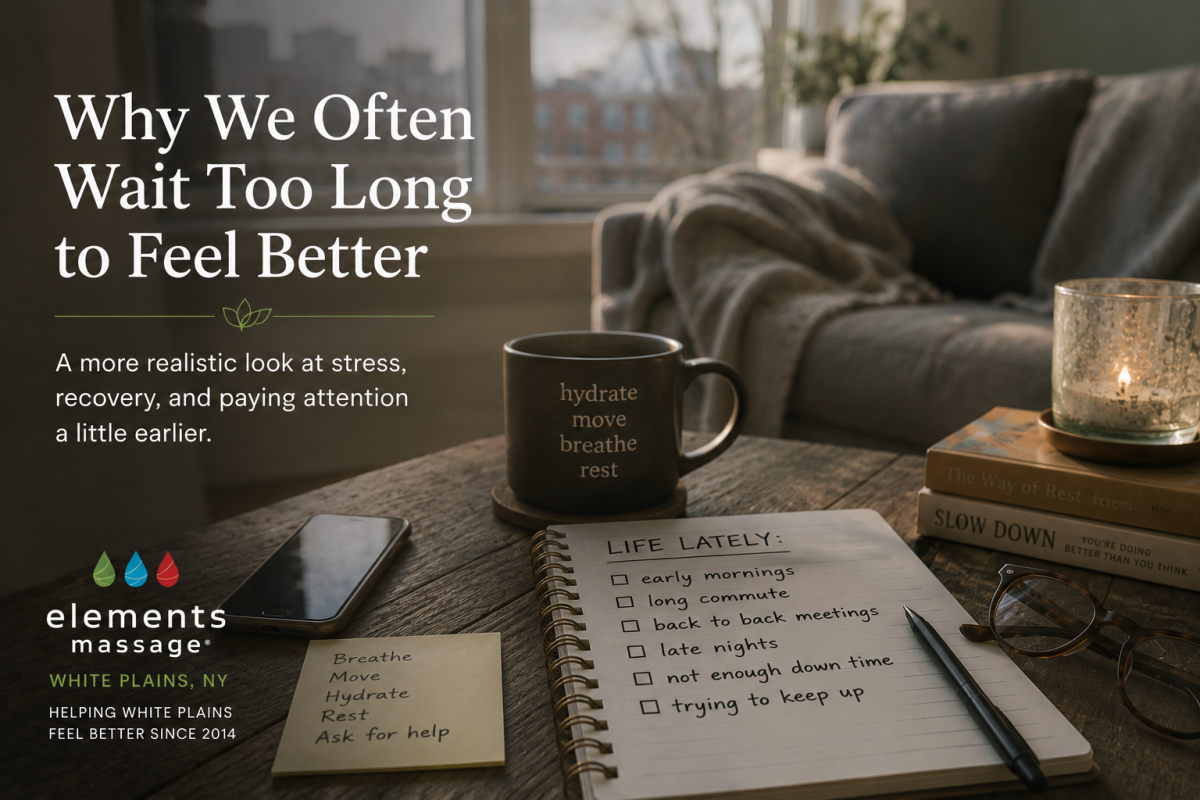
A More Realistic Look at Stress, Recovery, and Paying Attention Earlier
Most people do not intentionally ignore themselves.
Life usually just gets full gradually.
A few busy weeks at work.
Long commutes into the city.
Getting home later than expected.
Weeks that feel a little fuller than planned.
Trying to mentally keep up with too many things at once.
Realizing downtime slowly became harder to protect.
For many people throughout White Plains and Westchester, tension rarely arrives all at once.
It tends to build quietly in the background while life keeps moving.
At Elements Massage White Plains, NY, therapists and estheticians often talk with clients about something many people eventually notice for themselves: sometimes the body and skin begin asking for attention long before someone fully realizes how much they have been carrying.
And often, feeling better starts with noticing those patterns a little earlier.
Most People Do Not Suddenly “Hit A Wall”
Overload rarely appears dramatically overnight.
More often, it looks like:
• tightening the shoulders during meetings without noticing
• feeling mentally “on” long after getting home
• jaw tension during demanding weeks
• waking up still feeling tired
• difficulty slowing down at night
• skin feeling more reactive or depleted
• workouts taking longer to recover from
• constantly adjusting posture at a desk
Many people continue moving through those patterns longer than they intended to simply because life keeps asking for attention elsewhere.
Therapists hear versions of this every day.
Clients often say things like:
“I did not realize how tense I was until I finally slowed down.”
That awareness matters.
Because many people are not avoiding wellness intentionally. They are usually just adapting to busy routines for so long that tension starts feeling normal.
Wellness Often Slips Gradually
One of the biggest misconceptions about wellness is the idea that people either “have balance” or they do not.
In reality, most routines shift gradually over time.
Sleep schedules change.
Work seasons become busier.
Recovery gets pushed later.
Hydration slips.
Downtime becomes harder to protect.
Even skin care routines often become more reactive than intentional during overloaded periods.
For many people, wellness does not disappear because they stopped caring.
It simply gets pushed further down the list while other responsibilities take priority.
That is one reason therapists and estheticians often encourage people to think about wellness more realistically rather than treating it like another all-or-nothing obligation.
Therapists And Estheticians Often Notice Patterns People Miss
One thing many clients are surprised by is how observant therapists and estheticians become over time.
Not in a judgmental way.
And not in a clinical or overly serious way.
But in the sense that they often notice patterns people themselves have not fully slowed down enough to recognize yet.
Things like:
• areas of chronic tension
• holding stress physically
• changes in recovery patterns
• jaw or shoulder tightness
• shallow breathing
• skin sensitivity
• dehydration
• signs of fatigue or overstimulation
Sometimes clients arrive convinced they “just need deep pressure.”
Other times they assume their skin only needs stronger products or more aggressive correction.
But many times, therapists and estheticians notice the body or skin may actually be asking for something different:
• recovery
• hydration
• slowing down
• gentler care
• consistency
• rest
That is one reason communication and customization matter so much at Elements Massage White Plains, NY.
Because care tends to work best when it responds to what someone is actually experiencing in real life.
Support Does Not Have To Be Extreme
One reason people sometimes delay taking care of themselves is because wellness can start feeling overwhelming.
People often assume they need:
• a perfect routine
• major lifestyle changes
• hours of free time
• complicated skin care systems
• intense workouts
• dramatic “reset” moments
But for many people, support looks much quieter than that.
Sometimes it is:
• scheduling a massage before tension becomes overwhelming
• finally slowing down for an hour
• getting more consistent about recovery
• paying attention to sleep
• supporting skin before irritation escalates
• noticing patterns earlier
• giving the body time to stop bracing for a little while
Not dramatic.
Not performative.
Just supportive.
And often, that kind of consistency feels much more sustainable long term.
Taking Care Of Yourself Should Feel Supportive, Not Punishing
At Elements Massage White Plains, NY, massage therapy and therapeutic skin care are approached as collaborative, personalized care designed around how real people move through real life.
Because schedules change.
Recovery needs change.
Skin changes.
Life changes.
And many people are already carrying enough pressure without wellness becoming another unrealistic standard they feel they are failing to maintain.
Sometimes taking care of yourself is not about doing more.
Sometimes it is simply about noticing what your body and mind may have been asking for a little sooner.
Helping White Plains Feel Better Since 2014